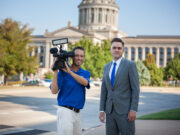







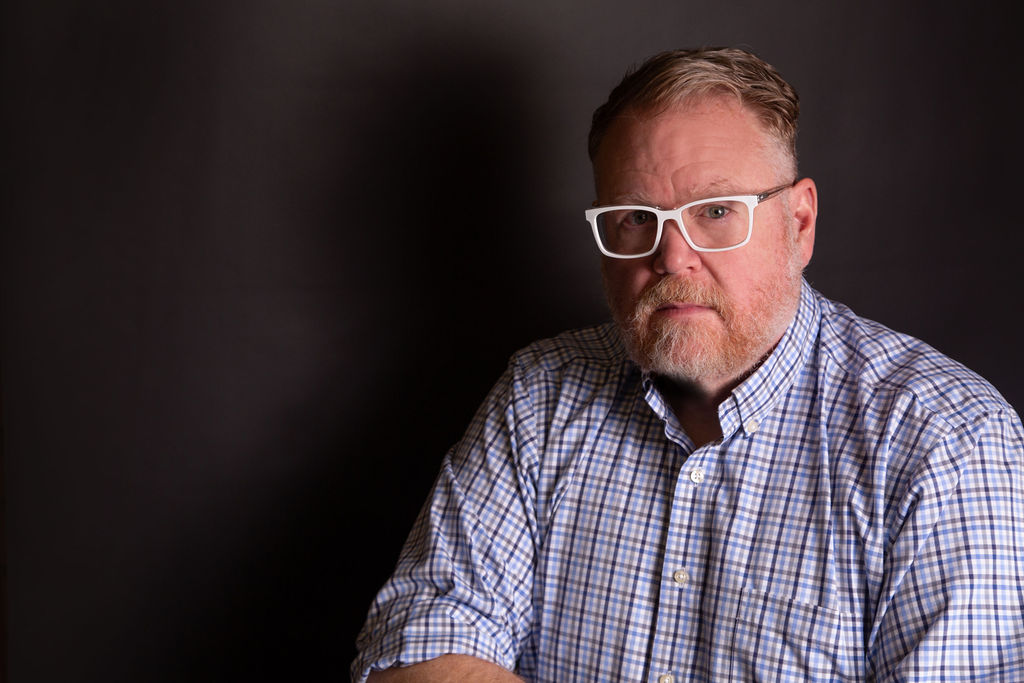
Salt Lake City, UT — A federal appeals court today revived independent journalist Bryan Schott’s First Amendment lawsuit against Utah legislative officials, finding that Schott plausibly alleged that the state legislature denied him a press credential because of his viewpoint. Schott, represented by attorneys from the Institute for Free Speech, will now get a full opportunity to vindicate his First Amendment rights.
In its first ruling addressing such a question, a panel of the U.S. Court of Appeals for the Tenth Circuit reversed a district court’s dismissal of Schott’s facial and as-applied viewpoint discrimination claims, finding that the lower court wrongly concluded Schott had no protected speech interest in equal access to a government-created press forum.
The court sent the case back to the district court for further proceedings. The panel also reversed the district court’s denial of Schott’s motion for a preliminary injunction, which the lower court had dismissed as moot once it threw out his underlying claims.
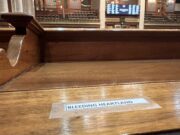
Schott had covered the Utah Legislature for 25 years, but officials denied him credentials for the 2025 session shortly after he left the Salt Lake Tribune and founded the independent outlet Utah Political Watch. The denial followed Schott’s reporting on a campaign finance complaint against Senate President Stuart Adams, after which legislative officials publicly and privately disparaged his work. The legislature also revised its credentialing policy to categorically exclude independent media. Schott alleged that officials applied the revised policy inconsistently, noting that other independent journalists were granted credentials.
The panel held that once a legislature opens government property to credentialed press, it cannot deny access to individual journalists based on their viewpoint. And it found Schott had plausibly alleged that officials had done exactly that: legislative staff disparaged his professionalism and ethics around the same time they moved to exclude independent outlets like his from credentialing altogether. “This is core protected First Amendment speech,” the court wrote.
In a separate concurrence, Judge Timothy Tymkovich explained that Utah’s blanket exclusion of independent media appears unconstitutional on its face, not merely as applied to Schott, because it penalizes journalists for the unedited, institutionally unaffiliated way they choose to report.
Drawing on the history of the First Amendment’s Press Clause, Judge Tymkovich noted that the Founders understood “the press” to protect ordinary pamphleteers and citizen-publishers, not just professionals, and that government attempts to judge a news outlet’s “legitimacy” echo the long-discredited Sedition Act of 1798. “A news organization is ‘reputable’ because of its speech,” he wrote, rejecting the Utah Legislature’s argument that its policy targets “disreputable” speakers rather than disfavored speech.
The American Civil Liberties Union of Utah Foundation filed an amicus brief supporting Schott. The Foundation for Individual Rights and Expression and the Reporters Committee for Freedom of the Press filed a joint amicus brief that did the same.
“Today’s ruling makes clear that, when the government opens its doors to the press, it cannot then pick and choose who gets to walk through those doors based on whether officials like what a journalist writes,” said Institute for Free Speech Senior Attorney Charles “Chip” Miller, lead counsel for Schott. “Utah’s Legislature revised its credentialing policy to exclude independent journalists right after a veteran reporter who covered the Capitol for decades and was known for asking tough questions started his own news site. Schott was the only journalist denied credentials. The Tenth Circuit recognized that this kind of viewpoint-based gatekeeping is exactly what the First Amendment forbids.”
“For over 25 years, I’ve covered the Utah Legislature without anyone questioning whether I was a ‘legitimate’ journalist,” explained Bryan Schott. “This ruling confirms what I’ve believed all along: the First Amendment prevents officials from shutting out a reporter simply because they don’t like the way he does his job.”
The case now returns to the U.S. District Court for the District of Utah for further proceedings on Schott’s revived claims.
To read the Tenth Circuit’s opinion in Utah Political Watch, et al. v. Musselman, et al., click here. To visit our case page, which includes all filings, case resources, and client photos, click here.
About the Institute for Free Speech
The Institute for Free Speech promotes and defends the political speech rights to freely speak, assemble, publish, and petition the government guaranteed by the First Amendment.